
Samsung Sports Live A new way to watch
Designed the UI framework, interaction model, and design system for a Smart TV service that brought live sports data, player stats, and fantasy content into the living room — without interrupting the game.
TV/10FT UI · INTERACTION DESIGN · VISUAL DESIGN · HARDWARE INTEGRATION · ACR TECHNOLOGY
250K
NFL fans reached in week one at launch
2014
Social TV Award winner
5
Sports: NFL, NBA, MLB, NHL, Soccer
1
Unified design system across all sports

Building the framework from the ground up
As Design Lead for Samsung Sports Experiences, I conducted user research on sports fans, defined the UI framework, designed the interaction model, and directed the visual and motion design of the service across all five sports. I also created the systems design and architecture, and developed the overall strategy to extend the platform beyond sports content — establishing the foundation for an enhanced services platform that could serve other content categories.
The hardest part of the role wasn't designing any single screen — it was designing a system flexible enough to serve five fundamentally different sports while feeling coherent and native to each of them.
raction specifications, and directed the visual and motion design of the service across all five sports. I led a cross-disciplinary team that included visual designers, motion designers, and worked closely with engineering and product on the ACR technology integration.
UX GOAL
"Enhance sports viewing experiences on TV with relevant, entertaining, and on-demand game information"

PRODUCT AIM
"Put fans in control of relevant TV sports data, content, and commentary whenever they want it"
THE PROBLEM
Stats are the story of sports. The TV was making fans look away to find them.
By 2013, sports fans had plenty of ways to get live stats — but all of them pulled them away from the game. Glancing down at a phone breaks the shared social experience that makes watching sports on TV compelling in the first place. Sports on television is meant to be communal. The phone is inherently individual.
The existing TV approaches weren't solving the problem either. TV program guides had overlaid information on broadcasts for years, but their intent was to take you somewhere else — navigate a menu, find a show, leave the content. Picture-in-picture shrank the broadcast to make room for the UI. Yahoo's TV widgets placed internet content in the corner of the screen but competed visually with the game and rarely updated in real time. Every approach treated the broadcast as something to interrupt rather than something to augment.
We were inspired by augmented reality. Not AR in the technical sense, but the idea behind it: what if the broadcast itself could become richer without losing what makes it compelling? What if the stats — the real-time story of what's happening on the field — could surface directly on the television, woven into the viewing experience rather than competing with it? The game stays. The story gets deeper.
MY ROLE

Design grounded in fan behavior, not assumptions
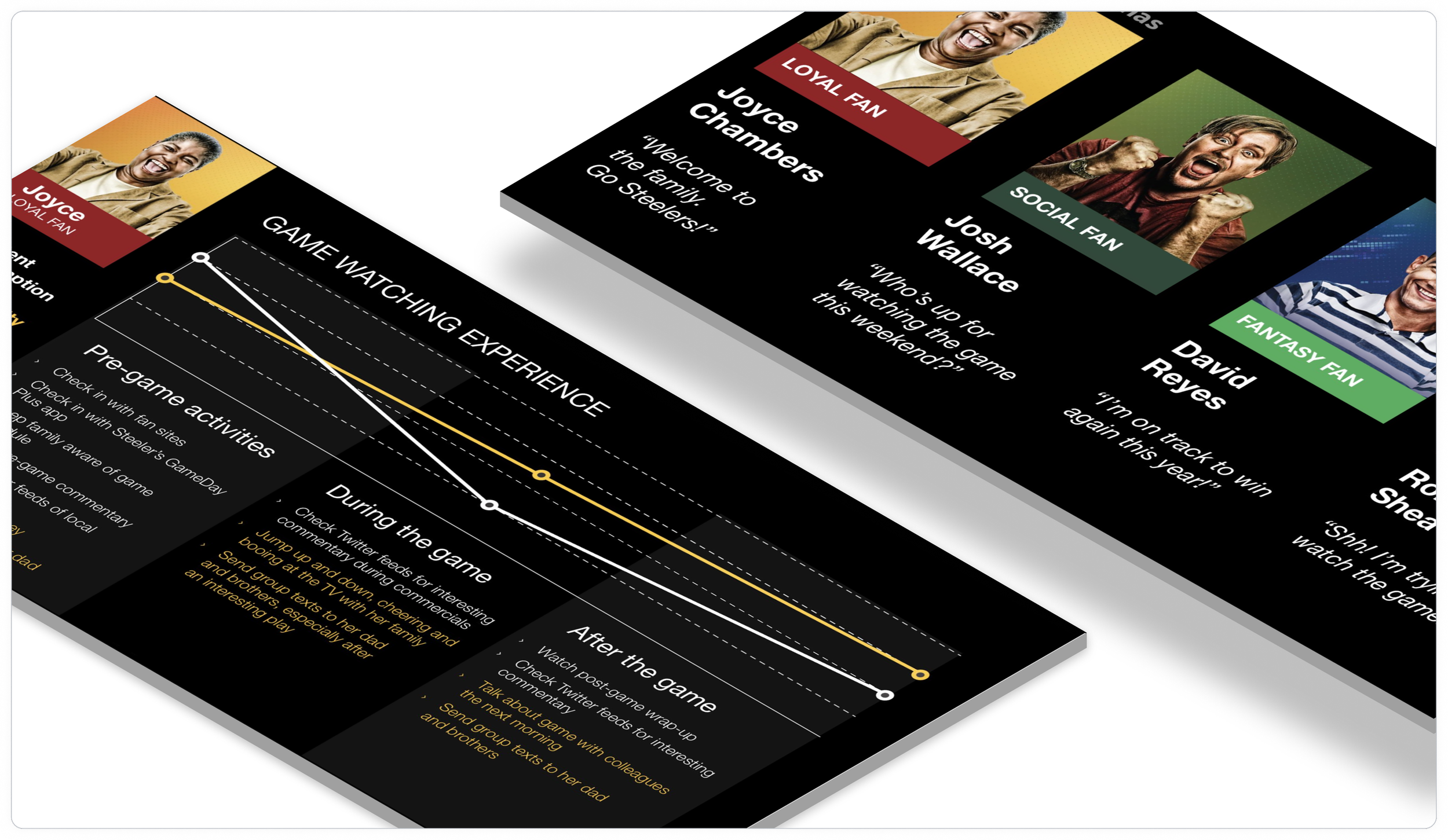
Before designing a single screen, we conducted user research on sports fans to understand how they actually watched games, what information they sought, and what would make the experience feel native rather than intrusive.
WHAT WE FOUND
Stats are the story
Fans don't just watch the game — they track it. Down-and-distance, player stats, fantasy points. The data enriches the viewing experience rather than distracting from it.
The phone interrupts the experience
Looking down at a phone to check stats pulls fans out of the shared social experience. Sports on TV is communal. The phone is individual. That tension was the design opportunity.
Control, not interruption
Fans don't just watch the game — they track it. Down-and-distance, player stats, fantasy points. The data enriches the viewing experience rather than distracting from it.
RESEARCH METHODOLOGY
User interviews and observation sessions with sports fans watching live games. The lean UX process meant research findings fed directly into design iterations — not a waterfall handoff but a continuous loop between insight and design.
Four problems that existing approaches hadn't solved
TV overlays, second screens, and picture-in-picture all existed. But none of them were designed to coexist with a live broadcast — to augment the experience rather than interrupt it. That was the specific gap we were designing for


Designing for lean-back experiences
Designing for television isn't scaling up a mobile interface — it's a fundamentally different discipline. The viewer's posture, distance, attention, and input method all demand a different approach.
THE OVERLAY IN CONTEXT — BROADCAST + UI COEXISTING
Broadcast first, always
01
The UI never covers action. Overlays anchor to the bottom or sides — the center of the frame stays clear for the game.
Legible at 10 feet
02
Minimum 32pt type, high contrast against variable broadcast backgrounds, generous spacing between all interactive elements.
Remote-first navigation
03
Minimum 32pt type, high contrast against variable broadcast backgrounds, generous spacing between all interactive elements.
Relaxed exploration
04
Information seeking replaced by casual discovery. Content surfaces contextually — fans browse, they don't search.
Contextually triggered
05
ACR detects the broadcast automatically. Data surfaces when it's relevant — player stats on a close-up, scores on a touchdown.
Motion with purpose
06
Transitions timed to broadcast rhythm — slow during commentary, faster during active play. Motion never competes with the action.

NFL
MLB
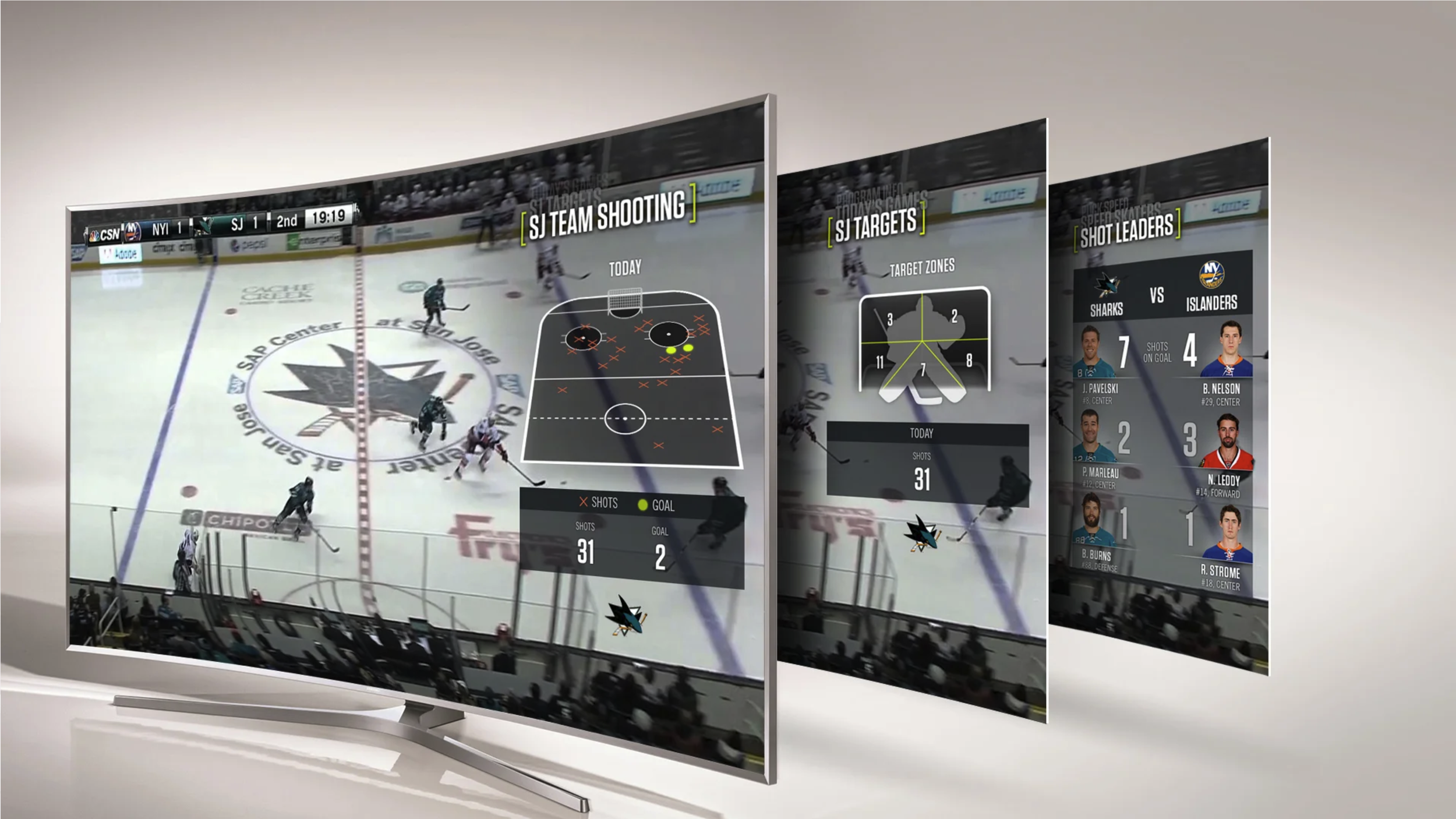
NHL
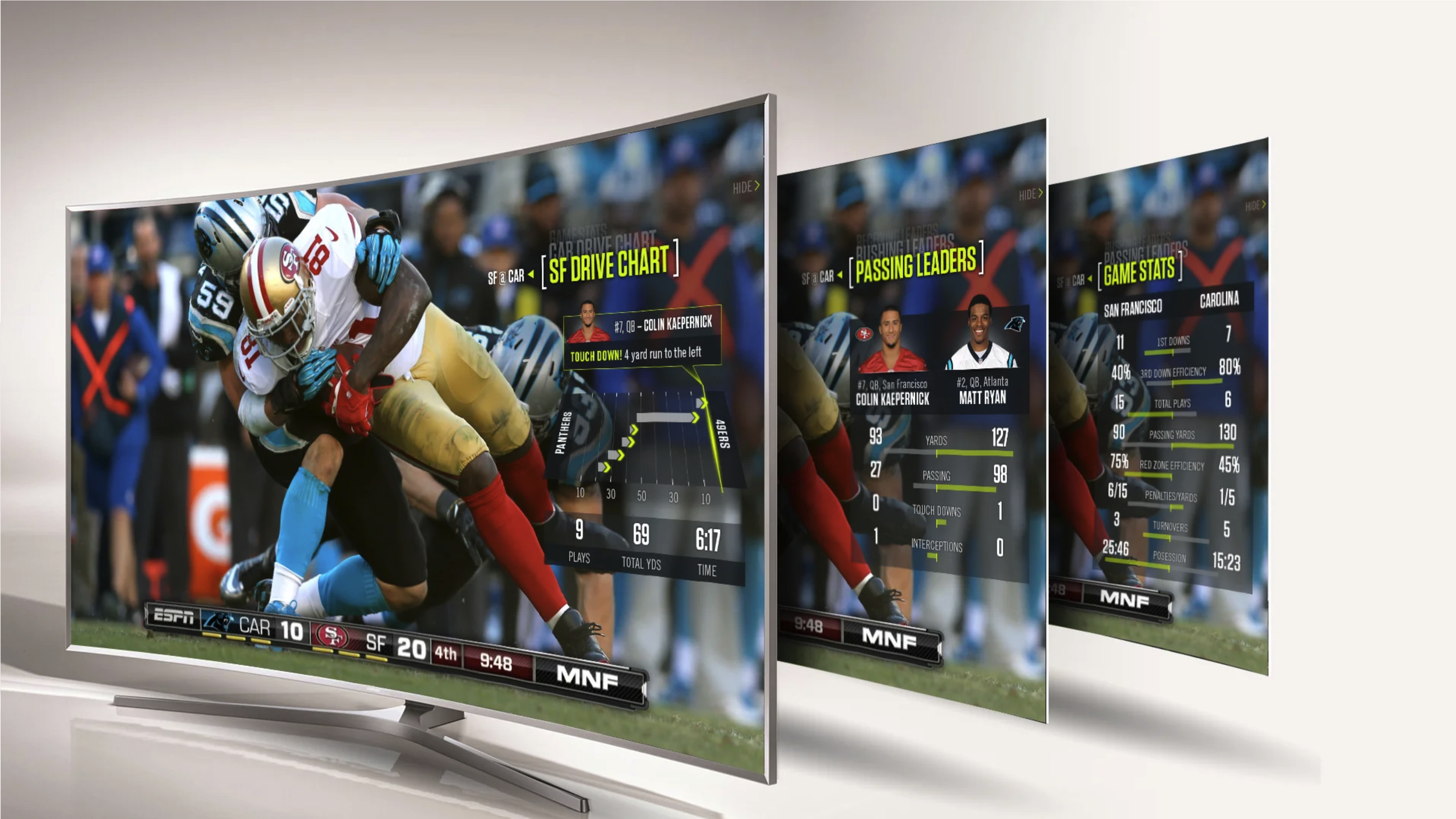
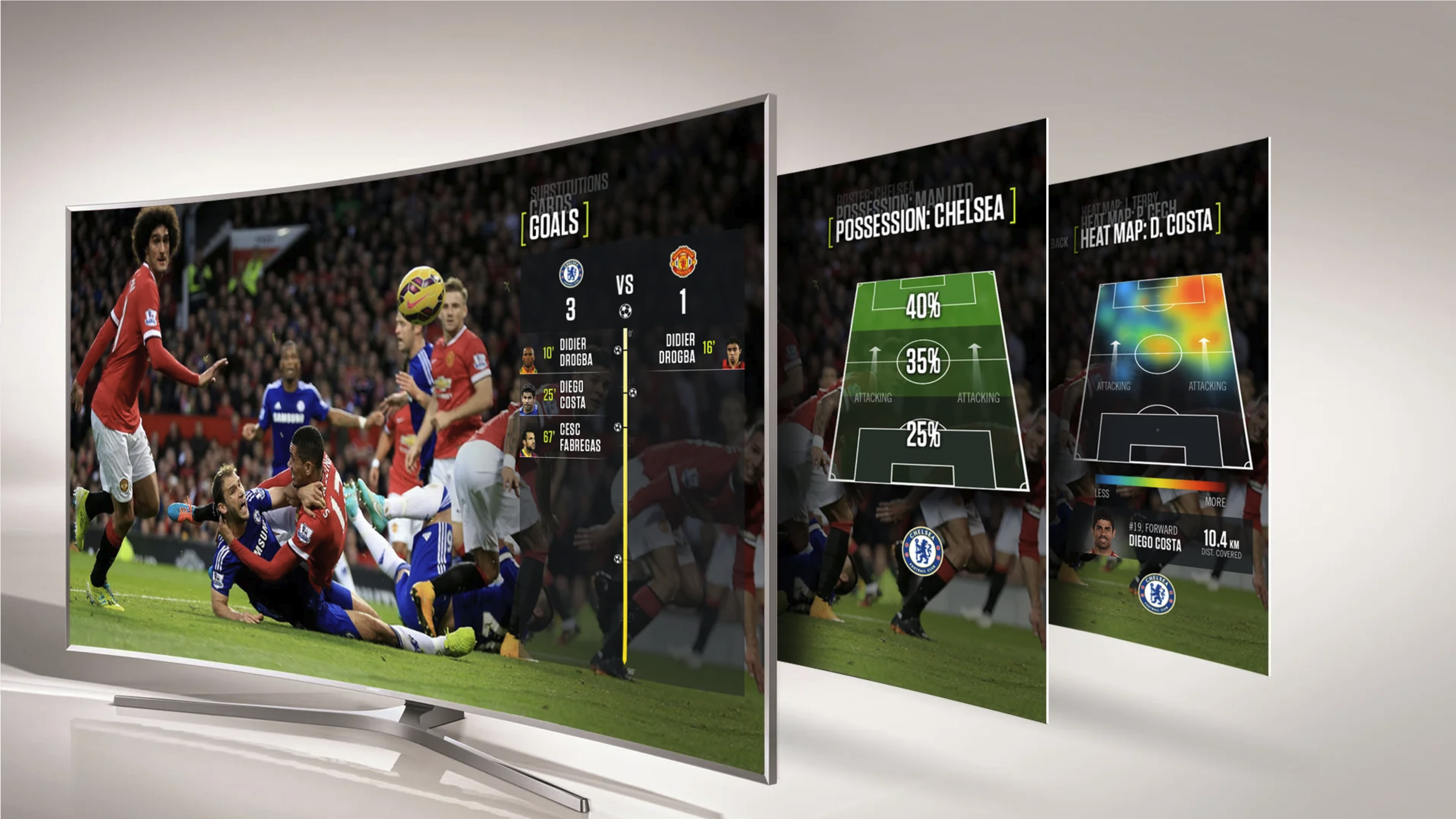
The same framework, a different expression for each sport
Each sport has its own data model, and its own fan expectations, but the same language. The design system had to flex to serve all five without fragmenting into five separate products.
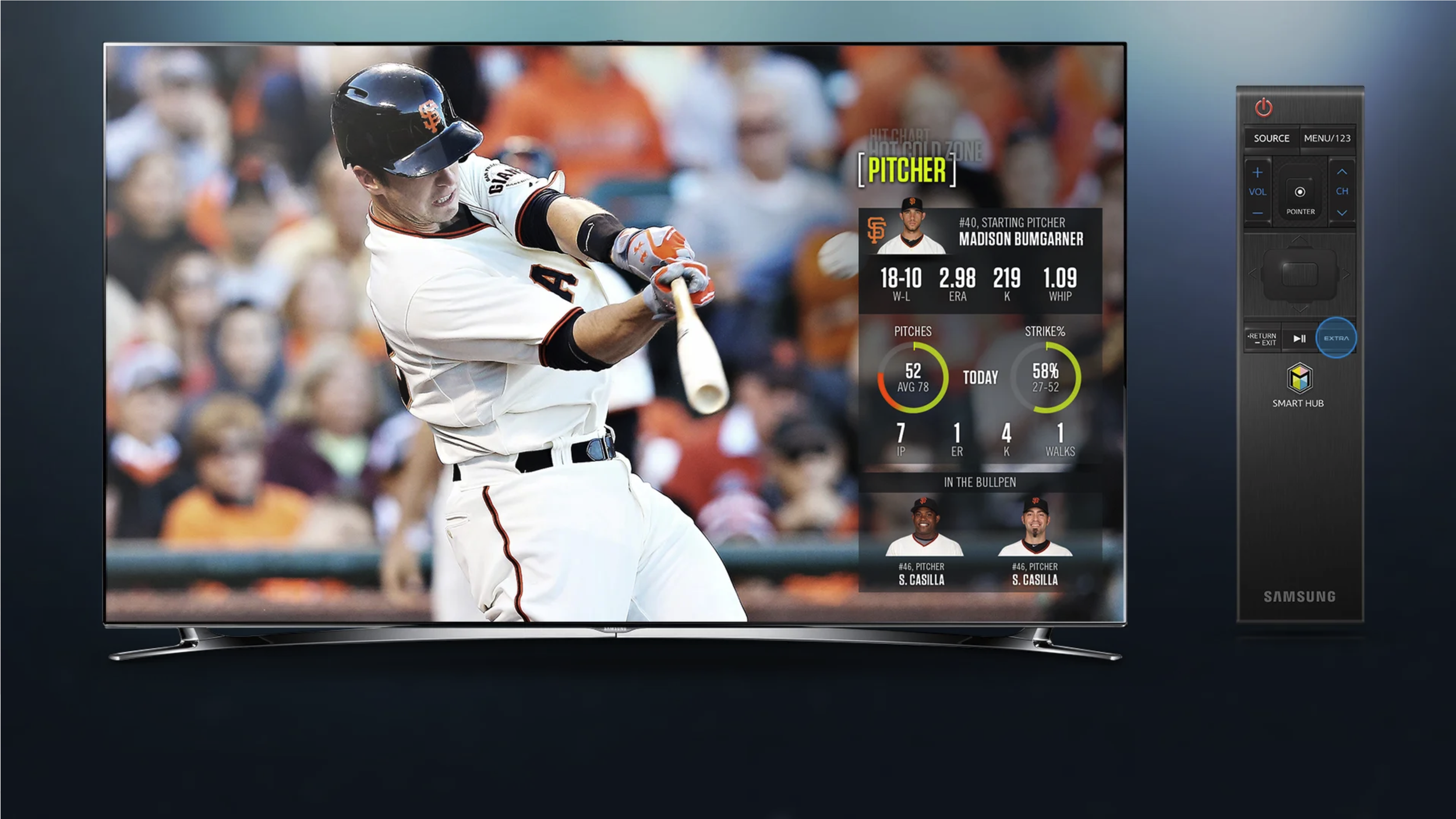
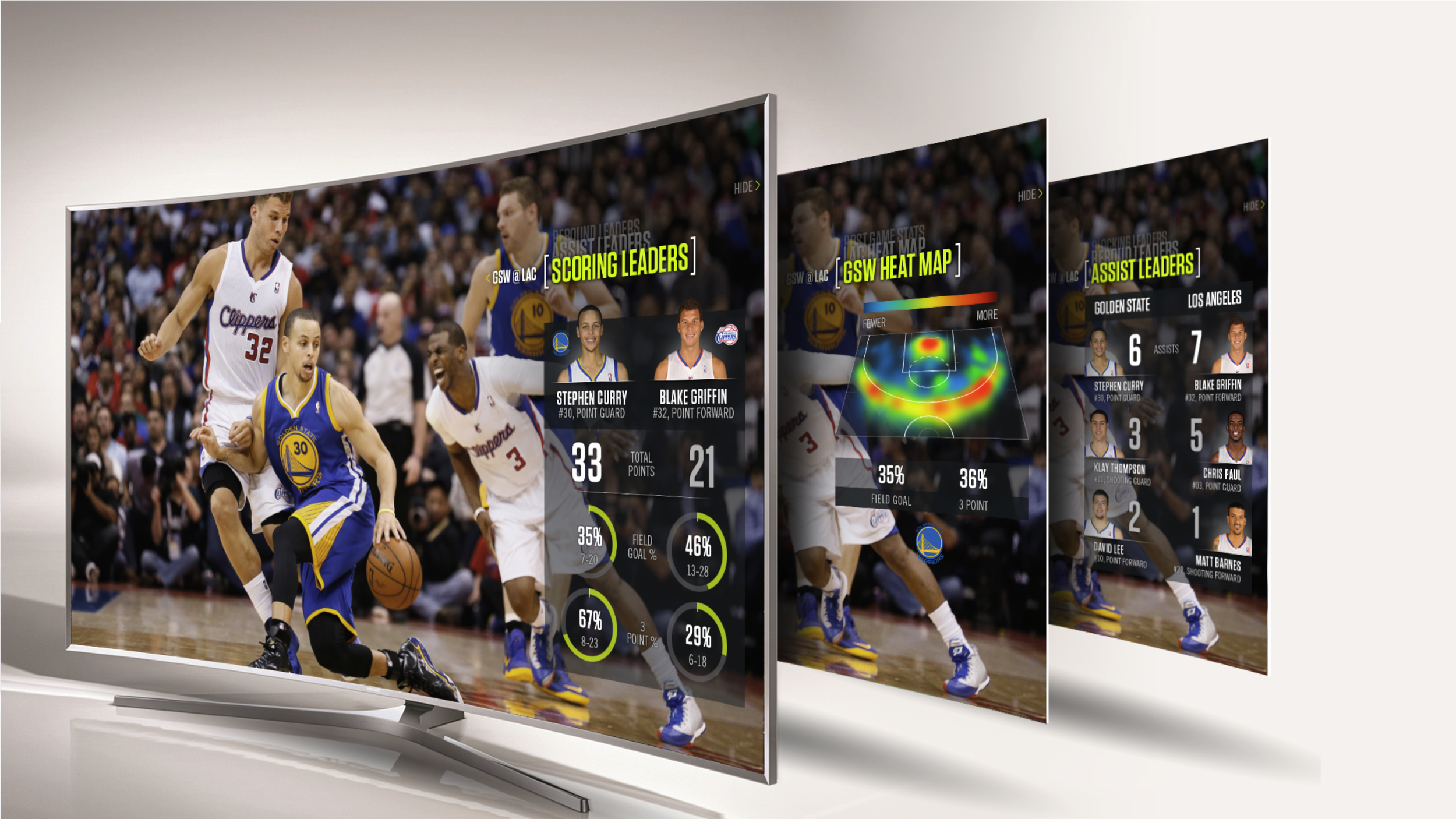
NBA
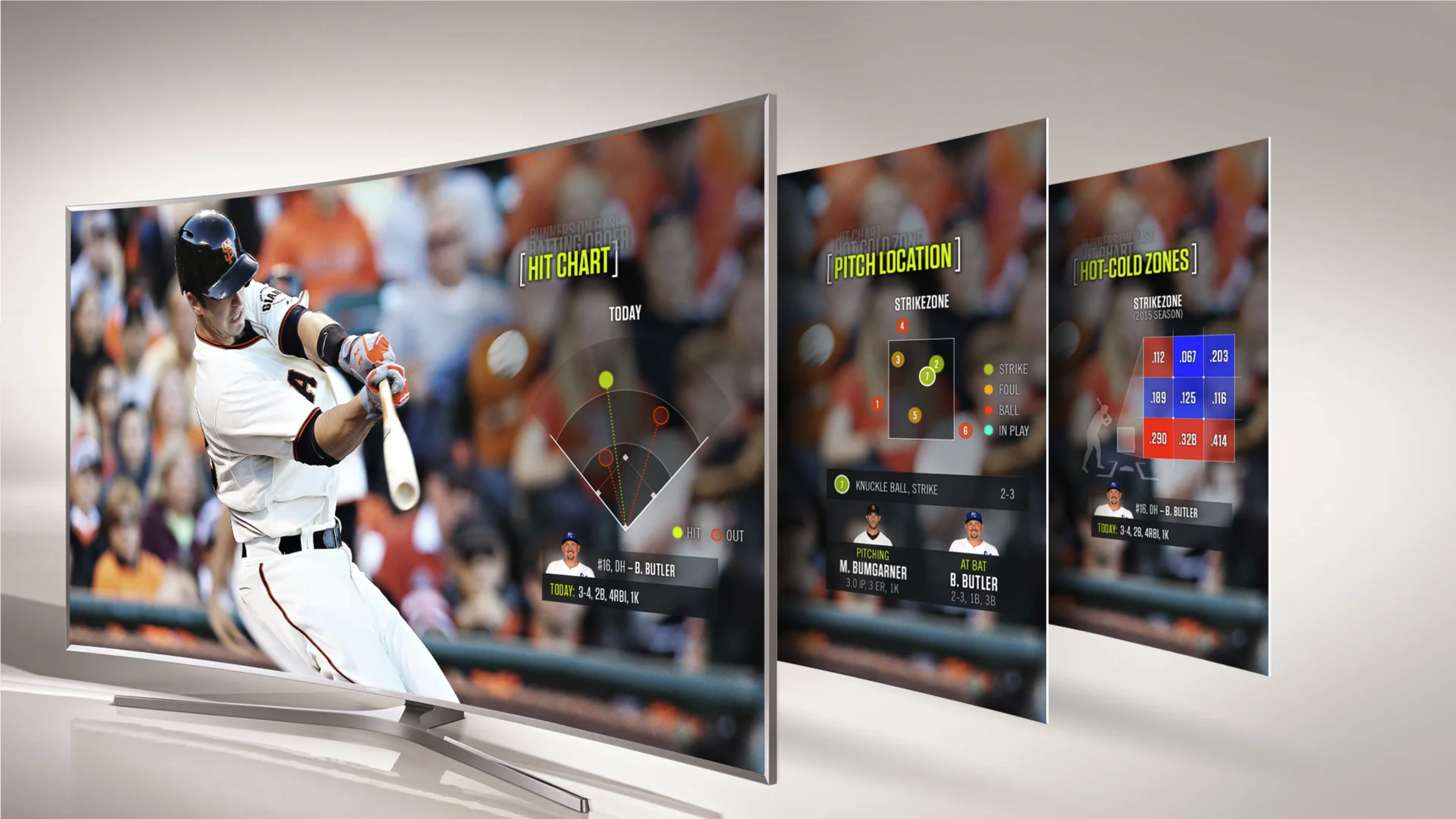
MLB
WHAT I LEARNED
Great design completes the moment. It doesn't overshadow it.
Designing for the 10ft experience forced a level of restraint that most digital platforms don't require. Every element that wasn't essential was a distraction from the broadcast. Every animation that wasn't perfectly timed competed with real-world action happening on screen. The discipline of designing for TV — where the content is always more important than the UI — shaped how I think about every product I've touched since. The best interface for a live sports fan is the one that’s invisible until its needed.